
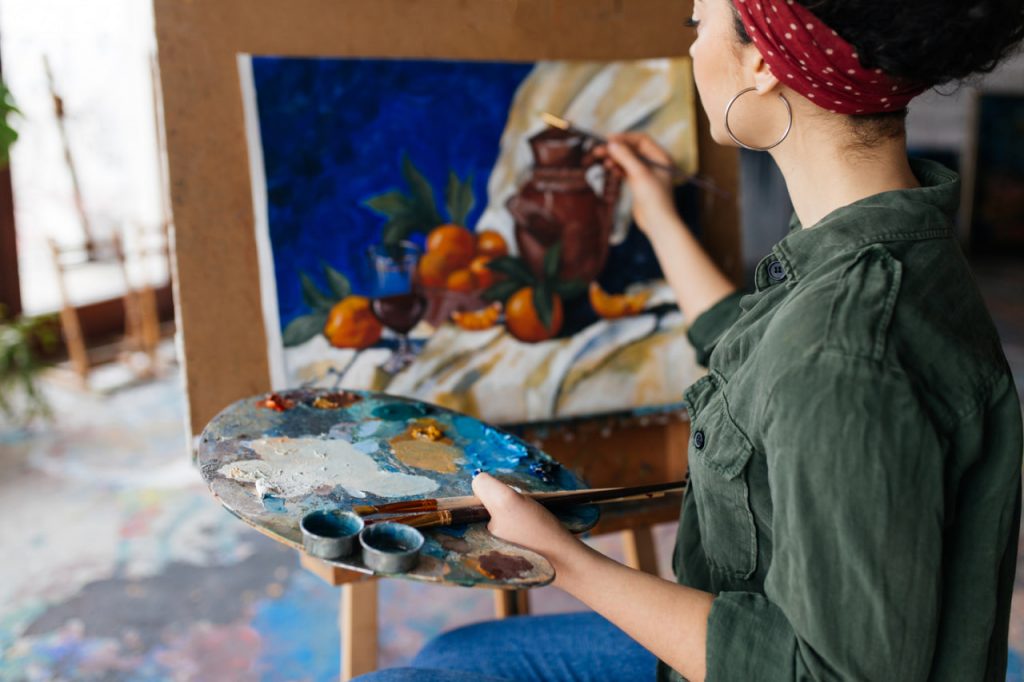
Blending is one of the most essential skills in oil painting. It allows artists to create smooth transitions between colors, render realistic forms, and achieve subtle effects in light, shadow, and texture. Unlike watercolors or acrylics, oil paint remains workable for a long time, giving artists the opportunity to refine edges and gradients, but this same property can be challenging without proper technique. Understanding how to control the paint, brushes, and medium is key to mastering blending in oil painting.
Blending is not just about mixing colors on the palette; it is about how colors interact directly on the canvas. When done well, blending produces a seamless flow that guides the viewer’s eye and enhances the sense of depth and volume. Poor blending, on the other hand, can result in harsh transitions, muddy areas, or a lack of cohesion in the composition.
Understanding the Basics of Blending
Blending in oil painting involves merging two or more colors on the surface while maintaining control over tone, hue, and value. The goal is to achieve smooth transitions that look natural and intentional. Artists often blend to create soft skies, gradual shadows on a figure, or subtle gradations in landscape elements.
The key factors for successful blending are paint consistency, brush selection, and timing. Thick, impasto paint behaves differently than thin, diluted layers, and each requires specific handling. Brushes with soft bristles or filaments are ideal for smoothing transitions without leaving streaks. Timing is critical because oil paint dries slowly, allowing for blending over extended periods, but also making it prone to overworking if handled too aggressively.
Techniques for Smooth Transitions
One of the most common blending techniques is the wet-on-wet method, also known as alla prima. In this approach, colors are applied on top of each other while still wet, allowing them to merge seamlessly. This method is excellent for skies, water reflections, and soft atmospheric effects. Artists can control the softness of the transition by adjusting the amount of paint, pressure, and brush strokes.
Another approach is feathering, where light, overlapping strokes gradually merge one color into another. Feathering works well for rendering gradual changes in value or hue on curved surfaces, such as rounded hills or sculpted figures. Using a clean, dry brush to gently sweep over the boundary between colors can further soften edges and unify the area.
Layered blending involves applying thin glazes or semi-transparent layers over a dried base to achieve subtle color shifts. This technique allows precise control over the final effect and is particularly useful in portrait work, still life, and delicate landscape details. By building up layers slowly, artists can maintain clarity and prevent muddy results.
Controlling Value and Hue During Blending
Effective blending is not just about making edges smooth; it also involves managing value and hue. When blending two colors, it is important to anticipate the resulting tone and adjust the initial colors accordingly. Light colors can be easily overpowered by darker tones if not applied thoughtfully, while complementary colors can neutralize each other and create muted or unintended effects.
Understanding color temperature is also crucial. Warm and cool colors blend differently depending on their placement and proportion. For instance, blending a warm yellow with a cool blue may require careful layering to avoid creating a muddy green unless that is the desired effect. Learning how pigments interact in wet paint ensures more predictable results.
Tools and Mediums for Blending
The right tools make blending more efficient and controlled. Soft-bristled brushes, such as filberts and synthetics with smooth tips, are excellent for creating soft transitions. Palette knives can also be used for certain blending effects, especially when combining colors on the canvas or scraping to soften edges.
Mediums such as linseed oil, stand oil, or liquin can extend drying time, improve flow, and enhance blending capacity. Using a medium can help thin paint for glazes or maintain a workable consistency for longer periods. However, it is important not to overuse medium, as excessive oil can reduce paint adhesion and gloss uniformity.
Common Blending Mistakes
Several mistakes are common when learning to blend in oil painting. Overworking an area can lead to streaks, muddy colors, or loss of texture. Applying too much paint too quickly may result in uncontrolled mixing or thick, unmanageable layers. Using stiff brushes for smooth transitions can leave unwanted marks, while neglecting value relationships can flatten forms and reduce the sense of volume.
To avoid these issues, artists should work gradually, using light pressure and observing how colors interact. Step back frequently to evaluate the overall effect rather than focusing solely on small areas. Practicing simple gradient exercises and controlled studies helps build skill before applying techniques to full compositions.